
Brands often make the mistake of trying to speak to everyone, instead of designing for someone specific. The strongest brands anchor everything around a clear persona, their lifestyle, habits, and preferences, so when they land on the site, it feels intentional. Like they’re being seen and like the brand already understands them. That’s what creates a cohesive experience.
Too often, websites are treated as static displays: product, price, image. But the real opportunity lies in designing with intention, especially at the exact moment a visitor is actively browsing.
A website should mirror the experience of a strong in-store interaction. It should bring the right people in, guide them toward a decision, and elevate the value of that moment.
Step 1: Getting the Right People In
Traffic can be easy, but relevance is what converts.
In fashion brands, this shows up through:
- Organic discovery (editorials, social, word-of-mouth)
- Paid placements (influencers, affiliates, targeted ads)
- Search behavior (what someone is already looking for)
The key is being visible to the right person at the right moment.
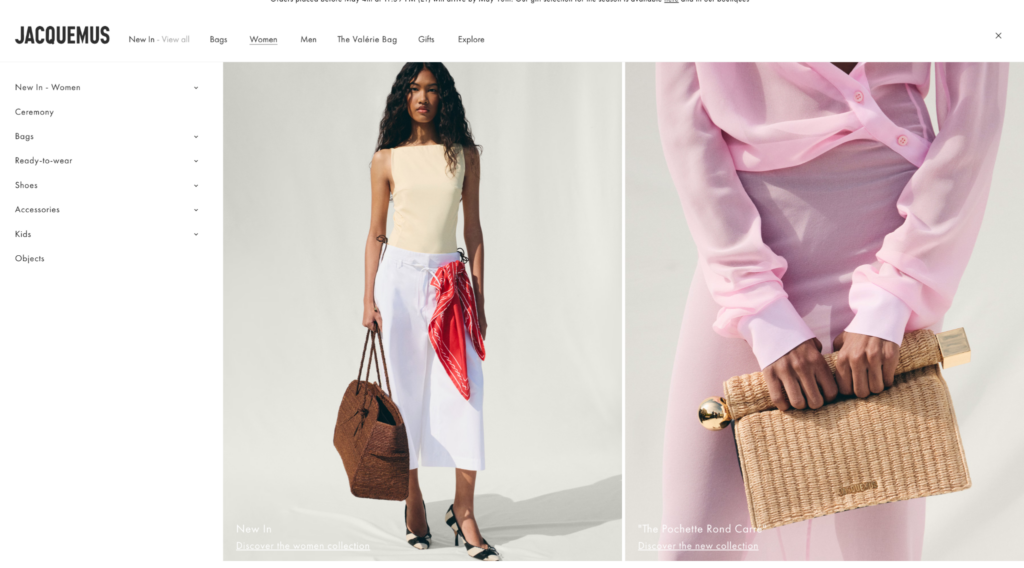
Rather than serving as decoration, the imagery functions as a targeting tool. Visitors instantly understand the lifestyle, price point, and aesthetic the brand represents, helping filter for consumers who are most likely to be interested in purchasing.
A brand like Jacquemus does this well. Their digital presence does not try to appeal to everyone, but instead targets a very specific customer persona through imagery, styling, and product presentation. This is important because attracting traffic alone is not enough. The goal is to attract qualified traffic: visitors who are already aligned with the brand’s aesthetic and values. When the right audience arrives on the site, they are more likely to engage with the content and ultimately convert into customers. The homepage screenshot above demonstrates how Jacquemus immediately communicates its identity through consistent visuals and a clear brand perspective, helping attract the right audience from the start.
Step 2: Turning Browsing Into Buying
If a customer walks into a store and no one acknowledges them, they’ll leave.
If a website is unclear, overwhelming, or impersonal, they would also just leave. Conversion online comes down to reducing uncertainty and helping visitors make confident purchase decisions:
• Can I find what I’m looking for immediately?
• Do I understand the product (fit, texture, styling)?
• Do I trust the brand enough to purchase?
Every element on a website should help answer these questions. Product imagery allows customers to better understand the product, reviews provide social proof from previous buyers, and detailed descriptions reduce uncertainty around quality, fit, and use. When these elements are present, visitors have greater confidence in their decision, which increases the likelihood of conversion.
Step 3: Maximizing the Moment
The most overlooked part of digital strategy is what happens after someone decides to buy, where true revenue is built:
- “Frequently bought together”
- Styling suggestions
- Product pairings that feel intentional, not random
It’s important that these suggestions feel more like taste-making than up-selling.
The Takeaway
A high-performing website does more than showcase products. It attracts qualified traffic, helps visitors make confident purchase decisions, and creates opportunities to increase revenue after the initial conversion. While great design certainly matters, the most effective websites are strategically built around the customer journey and the business outcomes of traffic, conversion, and revenue.