
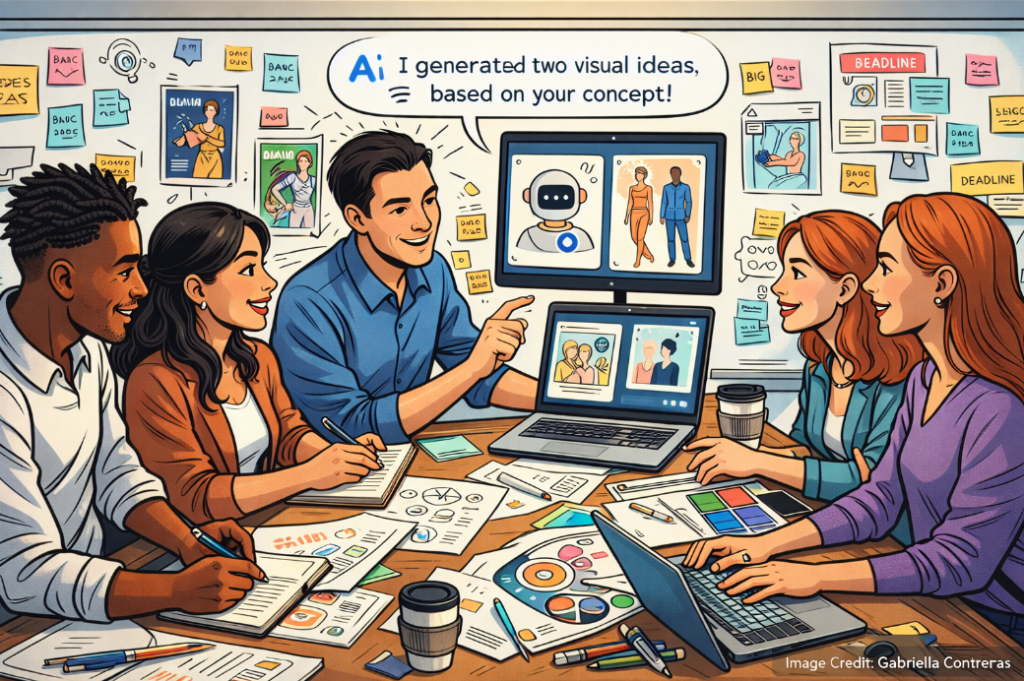
The topic of AI in the workplace can make some people feel uneasy. However, if we accept the idea that AI can reinvent workflow rather than replace workers, then we may be onto something. This is especially relevant in editorial and creative teams.
It’s important to not shy away from AI, and instead use it to enhance one’s work in their own voice. In publications, editors and writers can reduce writers block by introducing AI to aid their process, from the ideation phase to finalizing pitches. The true essence of someone’s writing will come from their own storytelling, voice and perspective. All AI should be responsible for is just easing the process.
Creative Ecosystem
For the creatives that are always using their eyes as a lens for the world to see, such as creative and art directors, AI can assist in generating visual concepts like moodboards. This helps in creating stronger decks and communicating ideas more efficiently to clients and/or collaborators. It’s critical to note that AI in this space is not there to replace vision, but help translate these abstract ideas into something tangible during early stages of development.
Photographers, stylists, set designers, and production teams can also use AI for upcoming shoots. From visualizing color palettes to testing lighting ideas, AI can promote their strengths and act as an assistant, not as their digital replacement.
AI can never substitute lived experience, which makes it hard to imagine eliminating the whole workforce, as it still needs human oversight to successfully aid in one’s project. For creative teams, its value lies in reducing time spent on repetitive tasks so that the focus can go toward a stronger vision and storytelling.